Connections and Interfaces
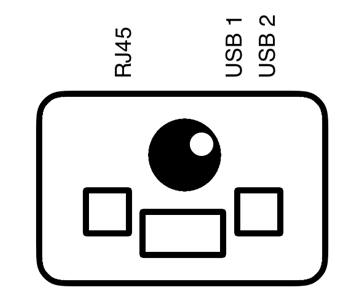
Physical Connections
| Port | Function |
|---|---|
| 2× USB-C | MIDI & power (independently usable) |
| 1× RJ45 | Ethernet LAN |
Protocols
| Protocol | Function |
|---|---|
| MIDI | USB (Class Compliant, no driver needed) |
| OSC | Open Sound Control via UDP/TCP |
| HTTP | GET, POST, PUT, DELETE |
| TCP | Raw socket, OSC, MIDI |
| Art-Net | DMX over Ethernet (universe/channel based) |
| sACN (E1.31) | Streaming ACN for DMX |
| Time Code | Receiving, forwarding and generating MIDI Time Code on both USB-C ports, and Art-Net TC over the network. A FrenschConnection LTC dongle extends this with LTC (SMPTE) timecode |
| HID | Keyboard & mouse |
USB Roles
The USB 2 port has three mutually exclusive roles. Switching happens in the web interface and requires a restart of the USB 2 part each time.
| Role | Description |
|---|---|
| USB MIDI device (default) | Class-compliant MIDI in both directions |
| USB HID device | Keyboard & mouse — see HID Mode |
| USB host | Drives an Elgato Stream Deck or the FrenschConnection LTC dongle — see USB Host |
note
The board does not supply USB VBUS. Accessories in host mode — Stream Deck and LTC dongle alike — therefore need a powered USB hub.
MTC (MIDI Time Code)
The FrenschPress supports MIDI Time Code on both USB-C ports simultaneously — as a receiver, as a bridge and as a master clock source. The USB host port additionally adds LTC via the dongle.
Full description: Timecode Overview, Art-Net Timecode and Timeline.